
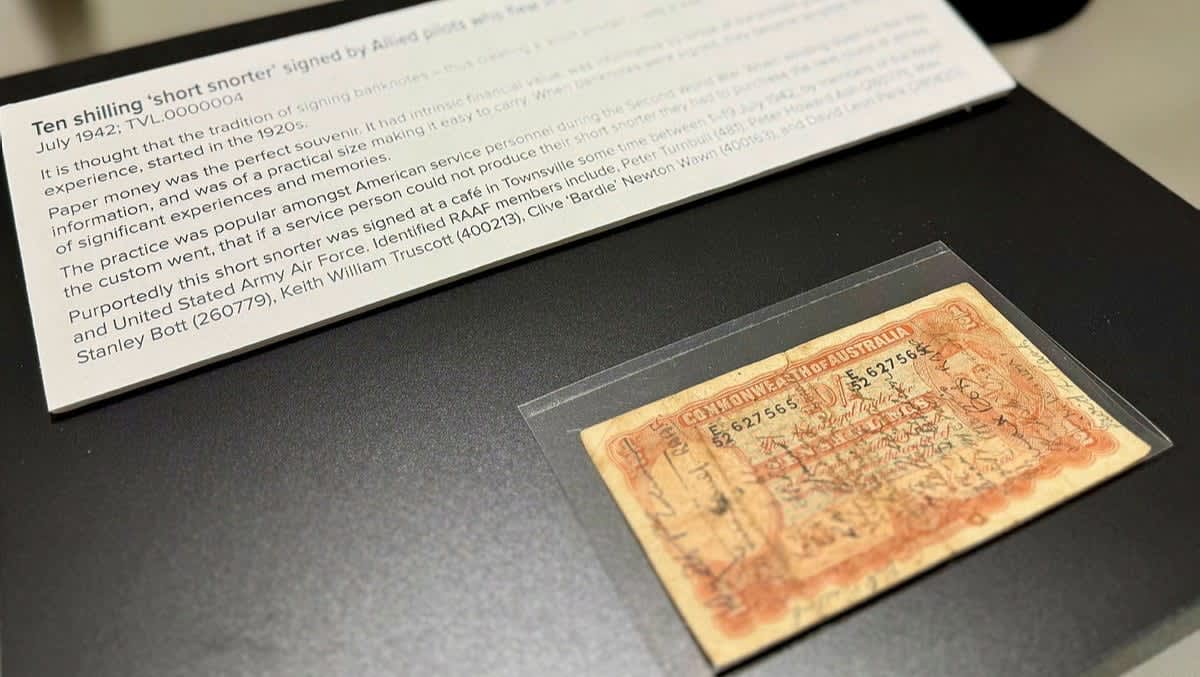

Another piece of wartime history is now on display at the RAAF Townsville Aviation Heritage Centre, in the form of a 10-shilling “short snorter” banknote from 1942.
The note, signed by Allied nations aviators, is believed to be from approximately 1 to 19 July 1942, and holds up to 30 signatures from RAAF and US Air Force personnel, with the confirmed and identified names of Peter Howard Ash, Max Stanley Bott, Keith William Truscott, Clive “Bardie” Newton Wawn and David Leon Pank.
This content is available exclusively to Australian Aviation members.
To continue reading the rest of this article, please login.
To unlock all Australian Aviation magazine content and again unlimited access to our daily news and features, become a member today!
A monthly membership is only $5.99 or save with our annual plans.
See benefits
-
Australian Aviation quarterly print & digital magazines -
Access to In Focus reports every month on our website
MOST POPULAR
PRINT + DIGITAL
See benefits
-
Unlimited access to all Australian Aviation digital content -
Access to the Australian Aviation app -
Australian Aviation quarterly print & digital magazines -
Access to In Focus reports every month on our website -
Access to our Behind the Lens photo galleries and other exclusive content -
Daily news updates via our email bulletin
DIGITAL
See benefits
-
Unlimited access to all Australian Aviation digital content -
Access to the Australian Aviation app -
Australian Aviation quarterly print & digital magazines -
Access to In Focus reports every month on our website -
Access to our Behind the Lens photo galleries and other exclusive content -
Daily news updates via our email bulletin
The tradition of short snorter notes was popular among Western servicemen in World War II and involved a group signing banknotes as souvenirs, with failing to produce one meaning buying the next round of drinks.
“It is a living, documented piece of history; a physical, tangible example of a time when the outcome of the war was completely uncertain,” said Squadron Leader Andrew Chadwick of History and Heritage (Air Force).
“That particular squadron, the American one, actually took over from 75 Squadron, which was the first squadron to go to Port Moresby, and it stopped the Japanese from advancing.
“They did their 44 days. They came home for rest and recuperation. 36 [Squadron] went up and did their tour and came back. 76 [Squadron] was in Townsville waiting to deploy and somehow those members who were on that note met up, probably to find out what the experience was up north.
“The importance of this allegiance occurring at that front-line level is incredible. That relationship projects forward 80-plus years to today.
Clive Wawn’s son, Clive Wawn Junior, who is currently 75, said he was unaware of the tradition, but seeing his father’s signature has reignited faith in him and sparked newfound sense of connection.
“It’s hard to explain the feelings it brings up. I do believe there is a higher power involved here.
“It is important that people get to know what these people had to go through, especially younger people who don’t know the hardship of war.
“I have such a sense of pride that this is on display at the RAAF Townsville Aviation Heritage Centre.”
#Wartime #short #snorter #banknote #finds #home #RAAF #Townsville #Australian #Aviation




Leave a Reply