
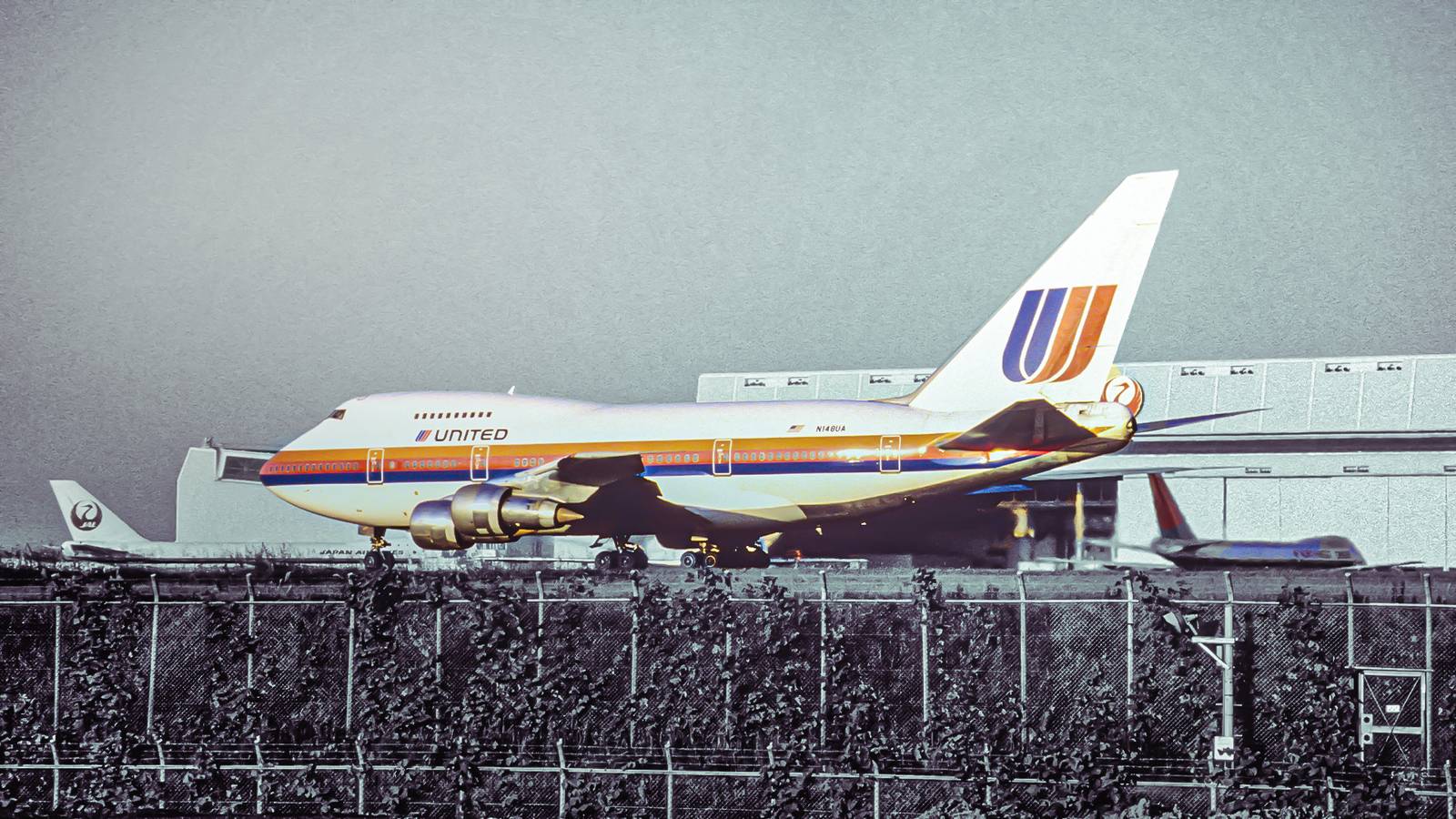
How many Boeing 747SP’s were built is a question that often surprises even well-informed aviation enthusiasts. As one of the most distinctive members of the iconic 747 family, the SP combined extreme long-range performance with a dramatically shortened fuselage, creating an aircraft unlike any other jumbo jet before or since. Despite its technical capabilities, it remained a rare sight in global airline fleets, making its limited production a point of lasting curiosity.
The 747SP emerged during a period when airlines were pushing the boundaries of nonstop intercontinental travel, often constrained by geography, overflight restrictions, or airport performance limitations. This article examines exactly how many were built, why production stopped where it did, which airlines found value in the aircraft, and how changing technology ultimately reshaped the market it was designed to serve. In doing so, it explains how the 747SP became both a specialized success and a commercial outlier.
A Rare Variant Of An Icon

Wikimedia Commons | Simple Flying
In total, just 45 Boeing 747SP aircraft were built, according to ch-aviation. This figure represents the entire production run of the shortened-fuselage variant of the 747, with no later extensions, derivatives, or restarted manufacturing runs. Fleet and production data compiled by ch-aviation confirms that all 45 airframes were delivered across a relatively short production window, making the 747SP one of the rarest large commercial airliners ever to enter service.
To put that number into context,  Boeing produced more than 1,500 aircraft across the wider 747 family, meaning the SP accounted for only a very small fraction of total jumbo jet output. No other passenger 747 variant came close to such a limited build total, highlighting just how specialized the SP was from the outset. Its production run was closer in scale to niche aircraft like Concorde than to any other mainstream Boeing widebody that came before, or after, for that matter.
The distribution of those 45 aircraft further illustrates the aircraft’s narrow market. By analyzing ch-aviation’s fleet records, what is instantly notable is that the type was operated by a relatively small group of airlines, including Pan Am, South African Airways, Iran Air, Qantas, and several government or VIP operators, rather than achieving widespread global adoption. Today, most of the fleet has been scrapped, retired, or preserved, with only a handful remaining in storage or specialist roles, reinforcing how limited the original production run ultimately was.
Why Were So Few Ordered?

The limited production of the 747SP was not the result of a single flaw, but rather a combination of timing, economics, and rapid changes in airline operating philosophy, according to the 747SP Website. When the aircraft was launched, Boeing was responding to a very specific demand for ultra-long-range capability at a time when few alternatives existed. However, that demand proved far narrower than anticipated, and it began to shrink almost as soon as the aircraft entered service.
One of the most significant factors was the pace of technological change. Advances in engine reliability and performance quickly improved the capabilities of twin-engine widebodies, reducing the need for a four-engine aircraft optimized purely for range. At the same time, operating costs remained high, as the 747SP still carried the fuel burn, maintenance complexity, and airport infrastructure requirements of a widebody jumbo, despite its reduced seating capacity, as noted in a Reddit thread. This left airlines weighing an aircraft with exceptional performance against one with challenging economics.
|
Factor |
Impact on the 747SP |
|---|---|
|
Ultra-long-range focus |
Solved a niche problem rather than a mass-market need |
|
Four-engine configuration |
Higher fuel and maintenance costs |
|
Rapid twinjet improvements |
Reduced demand for four-engine range specialists |
|
High acquisition cost |
Difficult to justify for most airlines |
|
Limited route requirements |
Few networks truly needed its capabilities |
As a result, only a small number of airlines found the 747SP compelling enough to order. Carriers with unique geographic or political constraints, such as the need to bypass overflight restrictions or operate extremely long nonstop sectors, were among the few that could justify the aircraft. For most airlines, however, evolving twin-engine alternatives and more flexible route planning offered a better balance among range, capacity, and cost, ultimately limiting how many 747SPs Boeing could sell.

Why Is Lufthansa Still Flying Two Different Boeing 747 Variants?
The Queen of the Skies lives on: Lufthansa’s unique reasons for keeping both the 747-400 and 747-8 in its fleet.
Small But Mighty

Among the airlines that operated it, the 747SP was generally regarded as a highly capable aircraft that delivered exactly what Boeing promised. Operators consistently praised its range performance, climb capability, and ability to operate nonstop routes that were otherwise impractical in the 1970s and early 1980s, according to Aviation Review Materials. From a technical standpoint, the aircraft was widely seen as a success, even by carriers that ultimately chose not to expand their fleets.
Pan Am, one of the launch customers, used the 747SP to operate some of the longest nonstop services of the era, helping to reshape expectations around intercontinental travel. According to South African Airways – A Complete History, the airline relied on the type to maintain long-haul connectivity during periods when overflight restrictions limited routing options. Iran Air deployed the aircraft on ultra-long sectors that would have required multiple stops with earlier-generation widebodies, according to the airline. In each case, the SP was valued less for capacity and more for its ability to solve highly specific operational challenges.
|
Operator |
Primary Use Case |
|---|---|
|
Pan Am |
Ultra-long-range flagship routes |
|
South African Airways |
Bypassing overflight restrictions |
|
Iran Air |
Long nonstop international sectors |
|
Qantas |
Long-haul missions at the edge of range |
Aviation analysts have often noted that the 747SP’s mixed commercial record was not a reflection of poor design, but of a market that evolved faster than expected. The aircraft arrived just before improvements in twin-engine efficiency and reliability began to erode its core advantage. As a result, the SP developed a reputation as an aircraft admired for its technical prowess but constrained by commercial considerations. This combination helps explain why airlines spoke positively about its capabilities even as orders remained limited.
Maybe Not The Best Time To Arrive

When the 747SP entered service, it occupied a unique position in the long-haul market, offering a range capability that few other commercial aircraft could match at the time. However, it was not alone for long. As newer widebodies entered service, airlines were increasingly able to achieve similar mission profiles using aircraft that were more flexible, more efficient, or better aligned with evolving route strategies.
Compared to contemporaries like the standard 747-100 or the McDonnell Douglas DC-10, the SP offered superior range and performance from hot-and-high airports, such as Johannesburg, Mexico City, Denver, Addis Ababa, or Tehran, but at the cost of reduced capacity. While this trade-off made sense for a handful of routes, it limited the aircraft’s versatility. Later, aircraft such as the 767 and A310 demonstrated that twin-engine widebodies could deliver long-haul capability with far lower operating costs, reducing the need for a specialized four-engine solution, according to Cockpit King.
As these alternatives matured, the 747SP’s core advantage became harder to justify outside of very specific use cases. Airlines increasingly favored aircraft that could be redeployed across multiple routes rather than one optimized for a narrow set of missions. In hindsight, the SP can be seen as a technological bridge between early long-range widebodies and the more efficient twin-engine aircraft that would come to dominate intercontinental travel.

How Long Will The Boeing 747 Remain Flying?
With deliveries of the jumbo jet having only ceased in recent years, the type looks set to continue flying for several decades to come.
Where Did The Limitations Come From?

Despite its impressive performance, the Boeing 747SP carried several inherent limitations that restricted its long-term appeal. While it delivered exceptional range and climb capability, it did so by sacrificing seating capacity, leaving airlines with an aircraft that was expensive to operate relative to the number of passengers it could carry, as discussed in an Aviation Stack Exchange forum. This imbalance became increasingly difficult to justify as fuel prices fluctuated and airline economics grew more cost-sensitive.
For airlines operating only a small number of ultra-long-range routes, the SP made sense. However, for carriers seeking fleet flexibility, the aircraft quickly became a constraint rather than an advantage. Outside of specialized missions, many operators found that standard 747 variants or emerging twin-engine widebodies could cover a wider range of routes with fewer compromises, according to Smithsonian Magazine. As a result, even airlines that valued the SP’s performance rarely expanded their fleets beyond a handful of aircraft.
Another important nuance is that the 747SP’s concept aged quickly. Improvements in engine efficiency, airframe design, and long-range certification standards meant that later aircraft could achieve similar or better performance without requiring a four-engine platform. This left the SP without a clear role as aviation technology advanced, explaining why its production ended quietly and why no direct successor was ever developed, despite the aircraft’s technical strengths.
A Success Or Failure?

In total, just 45 examples of the 747SP aircraft were built, a figure that reflects how narrowly focused the aircraft’s mission really was. Designed to solve specific long-range challenges, the SP delivered exceptional performance but lacked the flexibility needed to succeed in a rapidly evolving airline market. Its limited production was not the result of flawed engineering, but of changing economics and advancing technology.
For the airlines that operated it, the 747SP often proved invaluable, enabling nonstop routes and operational capabilities that would otherwise have been impossible at the time. Yet as more efficient twin-engine aircraft emerged, the need for a four-engine range specialist diminished. What remains is an aircraft remembered less for its sales figures and more for the unique role it played at a pivotal moment in long-haul aviation.
Today, the 747SP occupies a distinctive place in aviation history, representing a transitional phase between early widebody ambition and modern long-range efficiency. Its story serves as a reminder that even technically successful aircraft can remain rare if the market moves faster than the design. In that sense, the 747SP stands as one of Boeing’s most intriguing “what-ifs,” defined as much by timing as by performance.
#Boeing #747SPs #Built



Leave a Reply