
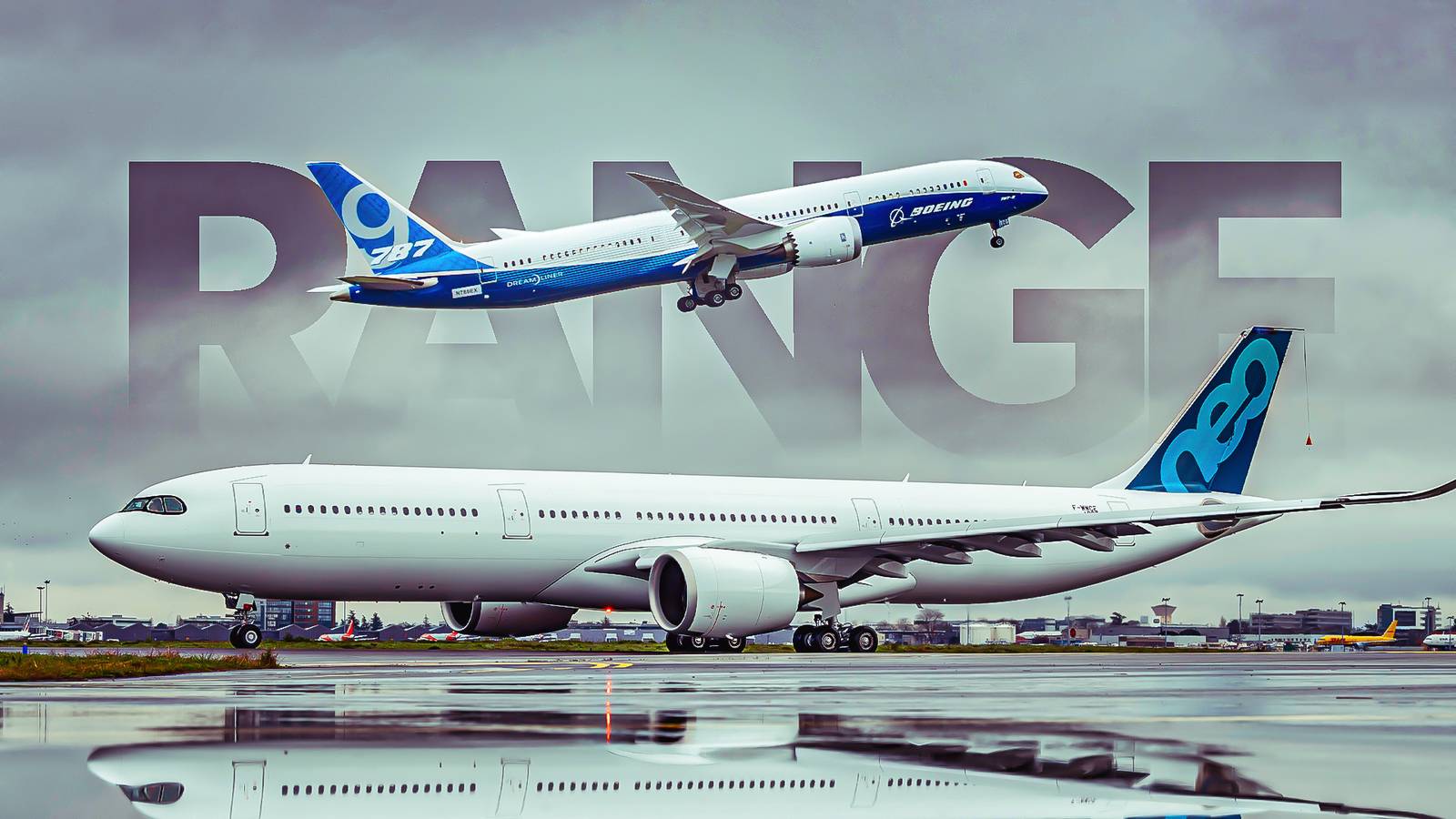
The Boeing 787-9 and Airbus A330-900 have become two of the most popular next-generation widebodies, each offering airlines impressive range, fuel efficiency, and long-haul flexibility. While the 787-9 helped redefine ultra-long-range travel with its advanced composite design, the A330-900 builds on a proven platform with modern engines and aerodynamics.
Together, they represent two different approaches to efficient long-haul flying, both shaping how airlines plan their global networks today. In this article, we will take a closer look at the range capabilities of both the Boeing 787-9 and Airbus A330-900. We will also consider the role that each aircraft plays in the long-haul commercial aviation market.
The Boeing 787-9’s Range Is 267 Miles Longer

The Boeing 787-9 has a maximum range of 8,705 miles (14,010 km), which is the longest of all three 787 variants. Thanks to its impressive range, the 787-9 is deployed on some of the world’s longest non-stop routes today, including Qantas’ flagship non-stop service between Perth Airport (PER) and  London Heathrow Airport (LHR). The flight was launched in March 2018, becoming the first regular non-stop passenger service between the two countries.
Qantas designed the onboard service specifically for ultra-long-haul comfort, with adjusted meal timings, improved cabin humidity, and lighting intended to help passengers manage jet lag. The success of this route has since become a key driver in the oneworld carrier’s push toward even longer-range operations as part of its Operation Sunrise plans. These will see it connect other Australian cities non-stop with destinations throughout Europe and the US.
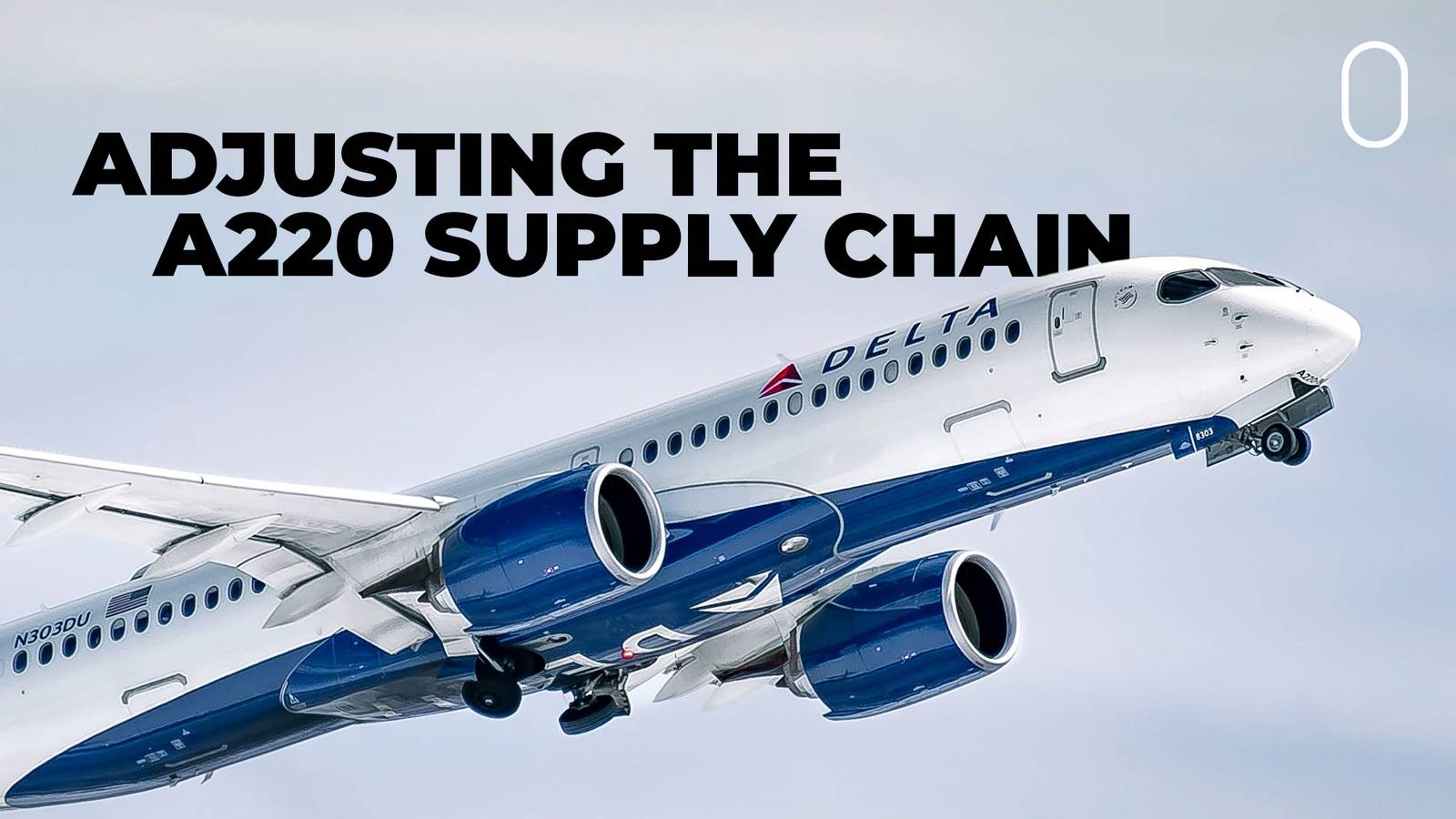
Meanwhile, the Airbus A330-900 has a slightly shorter (although still very impressive) range of up to 8,438 miles (13,611 km). The current longest route operated by the A330-900 is Delta Air Lines’ non-stop service between its transpacific hub at  Seattle-Tacoma International Airport (SEA) and Taipei Taoyuan International Airport (TPE). This comes in at 6,074 miles.

Why The Boeing 787-9 Dreamliner Has Much Longer Range Than The 787-10
The higher-capacity jet has some impressive capabilities.
All About The Boeing 787-9

The 787-9 has become one of the most recognizable and popular widebody aircraft in modern aviation, blending long-range performance with impressive fuel efficiency. The aircraft emerged from Boeing’s early-2000s drive to create a next-generation twinjet built around advanced composites and cutting-edge aerodynamics. While the smaller 787-8 was the first variant to fly, the stretched 787-9 was developed to offer greater capacity and even better range.
The  Boeing 787-9 completed its maiden flight in September 2013, showcasing a structure made of roughly 50% composite materials, larger cabin windows, improved pressurization, and highly efficient engines from either Rolls-Royce or General Electric. The aircraft’s design focused on reducing fuel burn by around 20% compared to previous-generation aircraft of similar size, while also improving passenger comfort through quieter cabins and smoother ride technology.
All Nippon Airways became the launch customer, placing the 787-9 into domestic service in August 2014, while the aircraft’s first international flight was operated by Air New Zealand between Auckland Airport (AKL) and Sydney Airport (SYD) later that month. The 787-9’s entry into commercial service marked a significant milestone, demonstrating the aircraft’s ability to operate long-haul flights while still delivering strong economics.
Since then, dozens of carriers, from major legacy carriers like  American Airlines to fast-growing newcomers like Riyadh Air, have added the type to their fleets. Depending on airline configurations, the 787-9 typically seats around 250-300 passengers. Over the years, the Boeing 787-9 has been praised for its operational flexibility, with airlines often using it as a sweet spot between the smaller 787-8 and the higher-capacity 787-10.
This allows them to adjust capacity without compromising range. Combined with a strong reliability record and ongoing interest from carriers seeking to refresh long-haul fleets, the 787-9 has gone on to be by far the best-selling of all three 787 variants, and continues to be one of Boeing’s most important widebodies, helping to redefine what efficient, comfortable long-distance travel could look like.
The World’s Largest Operators Of The Boeing 787-9

The latest data from ch-aviation shows that  United Airlines is currently the world’s largest operator of the Boeing 787-9, with a total of 45 in its fleet, followed closely by All Nippon Airways, with 44. The table below outlines the world’s largest operators of the type, alongside any other 787 variants they may operate.
|
Ranking |
Airline |
Boeing 787-8 |
Boeing 787-9 |
Boeing 787-10 |
Total |
|---|---|---|---|---|---|
|
1 |
United Airlines |
12 |
45 |
21 |
78 |
|
2 |
All Nippon Airways |
34 |
44 |
8 |
86 |
|
3 |
Etihad Airways |
– |
34 |
10 |
44 |
|
4 |
Air Canada |
8 |
32 |
– |
40 |
|
5 |
Hainan Airlines |
10 |
28 |
– |
38 |
|
6 |
American Airlines |
37 |
26 |
– |
63 |
|
7 |
LATAM Airlines |
10 |
26 |
– |
36 |
|
8 |
Turkish Airlines |
– |
24 |
– |
24 |
|
9 |
Qatar Airways |
31 |
23 |
– |
54 |
|
10 |
Japan Airlines |
23 |
22 |
– |
45 |
Newcomer  Riyadh Air has a total of 39 Boeing 787-9s on order, so it will likely climb up the list of largest operators over the coming years as it takes delivery of more aircraft and grows its worldwide operations from its hub at Riyadh King Khalid International Airport (RUH). The carrier recently launched flights to London Heathrow Airport (LHR) and is expected to commence services to other destinations, including Dubai International Airport (DXB), shortly.

Airbus A350 Vs Boeing 787: How Do They Compare On Ultra-Long-Haul Flights?
The A350 and Boeing 787 serve some of the world’s ultra-long-haul flights and complement each other in many airlines.
All About The Airbus A330-900

The Airbus A330-900 has quickly become a favorite among airlines looking for a modern, fuel-efficient widebody without stepping into the size and cost of larger next-generation jets. Introduced as part of the A330neo (New Engine Option) program, the A330-900 builds on the proven Airbus A330 design while adding new technology inspired by the Airbus A350. The result is a long-range twinjet that offers lower operating costs, improved comfort, and strong flexibility.
Launched in 2014, the Airbus A330-900 was the European manufacturer’s answer to the growing demand for more efficient widebodies. Engineers upgraded the aircraft with Rolls-Royce Trent 7000 engines, a new high-aspect-ratio wing with A350-style tips, and aerodynamic refinements throughout the airframe. These changes give the aircraft a significant reduction in fuel burn per seat compared to previous A330 models.
Inside the cabin, the A330-900 features Airbus’ Airspace interior, offering larger overhead lockers, customizable LED lighting, and improved noise insulation. The aircraft took its first flight in October 2017, and TAP Air Portugal became the launch customer in December 2018, deploying the aircraft on the popular route between its hub at Lisbon Airport (LIS) and São Paulo Guarulhos International Airport (GRU).
Since entering service, the Airbus A330-900 has proven to be a versatile performer, often deployed on transatlantic routes, long-haul leisure services, and high-density regional flights. Airlines appreciate its economics, as the aircraft typically seats between 260 and 300 passengers, depending on the configuration, which is enough to serve many key long-haul markets without the higher costs associated with larger twinjets.
The Airbus A330-900’s reliability and lower acquisition price have made it especially attractive to carriers looking to modernize fleets without overextending capacity. With steady orders from both full-service airlines such as Delta Air Lines and low-cost airlines like Cebu Pacific, the aircraft has cemented its place as a highly capable and efficient member of Airbus’s widebody family. It offers a balanced blend of performance, comfort, and affordability.

Over 30 Routes: Where Delta Air Lines Is Flying The Airbus A330-900neo
With its long range, the Airbus A330-900 has helped to revolutionize the commercial long-haul market. We investigate the routes Delta flies with them.
The World’s Largest Operators Of The Airbus A330-900

Delta Air Lines is currently the world’s largest operator of the Airbus A330-900, with 39 in its fleet, followed by TAP Air Portugal, with 19. The airlines currently operating the largest A330-900 fleets are outlined in the table below, alongside any other A330 variants they may operate.
|
Ranking |
Airline |
Airbus A330-200 |
Airbus A330-300 |
Airbus A330-900 |
Total |
|---|---|---|---|---|---|
|
1 |
Delta Air Lines |
11 |
31 |
39 |
81 |
|
2 |
TAP Air Portugal |
3 |
– |
19 |
22 |
|
3 |
Condor |
– |
– |
18 |
18 |
|
4 |
Cebu Pacific |
– |
– |
12 |
12 |
|
5 |
ITA Airways |
5 |
– |
11 |
16 |
|
6 |
Corsair International |
– |
1 |
9 |
10 |
|
7 |
Lion Air |
– |
5 |
8 |
13 |
|
8 |
Virgin Atlantic |
– |
10 |
8 |
18 |
|
9 |
Azul Linhas Aéreas |
5 |
– |
7 |
12 |
|
10 |
Garuda Indonesia |
3 |
15 |
5 |
23 |
The largest outstanding orders for the Airbus A330-900 are from VietJet Air, which is awaiting 40 of the type, and from Cathay Pacific, which is expecting delivery of 30 A330-900s. The latter will likely deploy the A330-900 on services throughout the Asia-Pacific region from its hub at Hong Kong International Airport (HKG).
Beaten By The Airbus A350

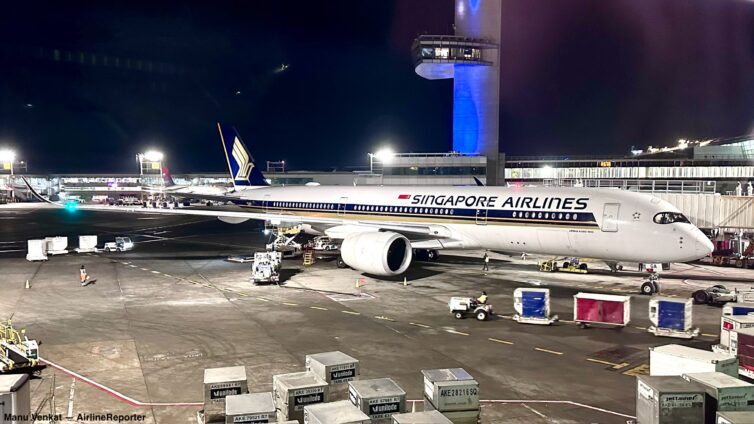
Despite the Boeing 787-9 and Airbus A330-900 having impressive long-distance ranges, they are both dwarfed by the range of the Airbus A350. The A350-900 has a range of up to 9,300 miles (14,966 km), while the A350-900ULR can fly up to 11,000 miles non-stop.
For that reason, the latter, which is operated solely by  Singapore Airlines, is deployed on what is currently the world’s longest non-stop commercial flight. This route connects Singapore Changi Airport (SIN) with New York John F. Kennedy International Airport (JFK).
Qantas will take this to new levels again next year when it launches further non-stop flights between Australia and Europe and the US with its dedicated fleet of Airbus A350-1000ULRs. Thanks to the additional fuel tank that the aircraft will be fitted with, they will be able to reach distances of more than 10,000 miles (16,600 km).
#Heres #Range #Boeing #Compared #Airbus #A330900neo


Leave a Reply